It’s no secret the world is a dangerous place. Every day, we hear about something – whether caused by humans or nature – that’s turned lives upside down. Bad news greets us in the morning and follows us to bed at night.
What are we to do?
Fear and stress are killers. They kill us from the inside out. We must find constructive ways to defuse the situation. Faith practices, physical exercise, counseling and peer groups… all can help, but there’s one thing everyone should consider: Get prepared.
When you take the initiative to recognize potential problems and prepare to deal with them when and if they come, you not only position yourself to face those difficulties, but knowing you’re ready helps lower stress.
In this guide, we’ll talk about disaster preparedness. We’ll talk about the supplies and equipment you and your family need to weather out the storm or make it through the crisis. And we’ll suggest ways you can save money and still get high quality goods.
By getting ready now, you won’t have to worry so much about what might happen. If a news alert says severe weather is headed your way, you’ll be ready for it.
You’ll know that whatever comes down the pike, you’re not going to be joining the crowd desperately trying to find a store with something left on the shelves or wondering how in the world to live without water and electricity.
We’ve tried to keep the recommendations here in line with those suggested by the American Red Cross. Responding to disasters is a big part of what they do every day.
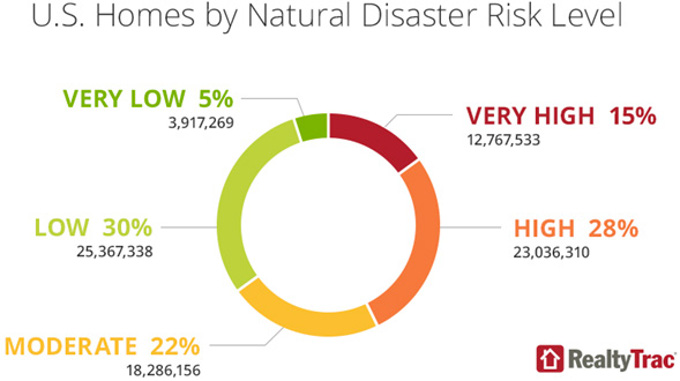
About two-thirds of U.S. residents live in areas where the natural disaster risk level is rated moderate to very high.
Most of Us Are Not Prepared for an Emergency – WHY?
Why don’t we stay ready, just in case the power goes out, the water doesn’t flow from the tap, or the grocery store has to close for a few days?
It’s a perplexing question.
We know disasters happen. We know we’re susceptible. Yet most of us are sorely unprepared.
And if we examine the usual answers to why that is, they all fail in the light of reason:
I don’t know how to prepare
We just don’t have time to figure it out
It hasn’t happened yet, so why worry about it?
I don’t have the money to get everything I need together
Public services like police, fire, and medical can handle any problem
According to data from the United States Census Bureau’s American Housing Survey only about one-third of American households have developed a communication plan and agreed on an emergency meeting location.
In this emergency preparedness guide, we’ll talk about the preparations you should make and suggest ways to check each item off with a minimum of expense and hassle.
After all, the best plan in the world won’t work if you don’t have the means to enact it.
Be aware of your particular situation
House fires are hands-down the disaster any of us are most likely to face. More Americans die each year, as a result of fire, than from all natural disasters combined.
According to statistics from the National Fire Protection Association (NFPA), your chances of experiencing a reportable house fire during your lifetime is one in four.
Though the risk does vary by location (see the chart above), house fires kill more Americans each year than all natural disasters combined. 3,428 lives were claimed by fire in 2014.
Wildfire, floods, winter storms, wind storms, tsunamis, earthquakes, volcanos – all pose different problems and require specific preparations. We won’t attempt to go deeply into the variables here. Rather, we’ll provide direct references to the information you’ll need to get aware and get prepared.
Hazards vary by location. The map below is based on mortality rates due to natural disasters over a 30+ year period.
Know your immediate environment
The Red Cross suggests a “hazard hunt” in and around your home. If you use natural gas, do you know how to shut off the gas? Do you know where the water and electrical shut-offs are? Are there rickety steps, frayed wires, or overloaded outlets? Take a walk around your property with an eye towards hazard identification.
While you’re on the hazard hunt, remember to also look for hazard abatements. Where are your smoke, heat, and CO2 detectors? Are they operating properly, and are the batteries being replaced regularly? Do you have fire extinguishers? Where are they, and are they properly pressurized? Where are water outlets and hoses? Where are emergency flashlights and batteries?
To be prepared, you not only need to make sure you have the necessary tools, but you must know where they are and be able to access them quickly.
The potential hazards examples
Do you know how to shut down the supply?
Do you know where the water and electrical shut-offs are?
Are there rickety steps, frayed wires, or overloaded outlets?
Where are your smoke, heat, and CO2 detectors?
Are they operating properly, and are the batteries being replaced regularly?
Do you have fire extinguishers? Where are they, and are they properly pressurized?
Where are water outlets and hoses?
Where are emergency flashlights and batteries?
Know where to get accurate, up-to-date information
FEMA’s Emergency Alert System (EAS) is an integrated network meant “to provide the President the capability to address the American people within 10 minutes during a national emergency.” Anyone watching television or listening to a radio station will receive those messages automatically.
For mobile devices, the Wireless Emergency Alerts (WES) system provides similar notifications. To find out more about the technology and how to tell whether your phone is WES ready, go to the NOAA website, Weather Ready Nation.
You should also subscribe voluntarily to emergency broadcast systems. From news about severe weather conditions near you to law enforcement announcements, those channels give you an early heads-up about things you might later hear covered in scheduled news broadcasts.
Here are some of those options:
American Red Cross: This is our favorite site for emergency preparation. Go there for training, get the Red Cross notification apps, sign up for news… but don’t leave until you’ve begun the process of becoming an American Red Cross volunteer. Make a difference for others while you learn. The Red Cross offers several smartphone apps to help keep you informed about hazardous conditions of all kinds.
National Weather Service Alerts: There’s a ton of information on the National Weather Service (NWS) website. You can drill down to the specific county or region, and you can install an app on your smartphone to get mobile notifications.
Here in the Internet Age, it’s not unusual to hear breaking news on Twitter or Facebook before it gets broadcast on traditional news channels. Early notifications can certainly help you avoid traffic jams and get ready quicker to face an oncoming emergency, but be sure to verify what you’re hearing online with official channels.
Ready.gov: This is the national clearinghouse for public safety. Find out about wireless emergency alerts, the emergency alert system, NOAA weather radio, and more. Although much of the information here is duplicated on the previously mentioned Weather.gov site, Ready.gov is a prime spot for getting information on how to deal with emergencies.
Alternative alert platforms are available for specific regions, for boats and ships, for those who are deaf or hard of hearing, for those near specific potential hazards (tsunami risk areas, for instance), and more. The weather.gov website offers an expanded list of options.
Warning: A hazardous event is underway or about to begin. Take cover and stay alert.
Problems occur when multiple advisories are issued over a period of time, but conditions don’t get too bad. When the advisory changes to a watch or warning (meaning the likelihood of occurrence is now considerably greater), people are often less prone to believe the prediction, thereby leaving themselves vulnerable to the hazard. By knowing what the terms mean, you’ll be in a better position to take appropriate action.
Talk, Plan, Practice – The Red Cross Prescription
It may sound like an out-of-order sequence for teaching someone how to deliver a speech, but the Talk, Plan, Practice model promoted by the Red Cross covers all the fundamentals of emergency preparedness.